
mattias.berglund@skogforsk.se
+46 (76) 610 43 77

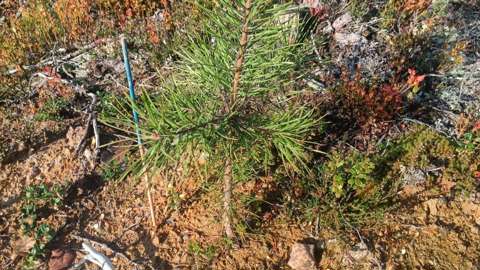
Choosing the right planting spots is essential to reducing mortality, the research results say.
In Swedish forests, an average of 21 percent of all planted Scots pine and Norway spruce seedlings die during their first three years of life. The situation is most severe in central Sweden (Svealand), where 28 percent of Scots pine seedlings and 25 percent of Norway spruce seedlings die before becoming established. These findings come from this year’s comprehensive analysis within Skogforsk’s Regeneration Check project, in which more than 100,000 seedlings across over 1,500 forest stands have been monitored.
“A large part of the future of new forests is determined during the establishment phase, and we clearly see that many seedlings are lost right from the start,” says Mattias Berglund, researcher at Skogforsk and project manager for Regeneration Check.
Drought in the North – Pine Weevil in the South
The underlying causes vary across the country, but the overall picture is clear. In northern Sweden, drought stress is the dominant factor behind early seedling mortality, particularly for Scots pine planted in inverted mounds on dry or mesic sites. Norway spruce is less affected by the planting spot than Scots pine, but even spruce shows increased mortality when planted in inverted mounds and where soil contact is poor.
In southern Sweden, the problem is different. Here, the pine weevil (Hylobius abietis) is responsible for the greatest losses. In Götaland, nearly half of all Scots pine seedlings die within three years when planted in unprepared planting spots.
“In southern Sweden, planting on sites that have not been site-prepared is a direct risk factor – the pine weevil is unforgiving,” says Jonas Öhlund, one of the Skogforsk researchers actively involved in the project.
Despite this, 17–27 percent of seedlings are planted in disturbed humus or unprepared planting spots, which in all regions are associated with lower survival rates and, in Götaland, often involve a substantially increased risk of pine weevil damage.
Small containerized seedlings are particularly vulnerable to drought when planted in inverted mounds in northern and central Sweden. However, the survival rate of small seedlings is just as good as that of larger seedlings when they are planted in mineral soil spots.
“We cannot influence the weather or the occurrence of pests, but we can influence how, where, and what we plant. That is where the greatest potential lies,” says Mattias Berglund.
The full results were presented during the Regeneration Forum (Föryngringsforum) webinar, broadcast on March 19.