
QR Code Shows the Journey of Timber Products
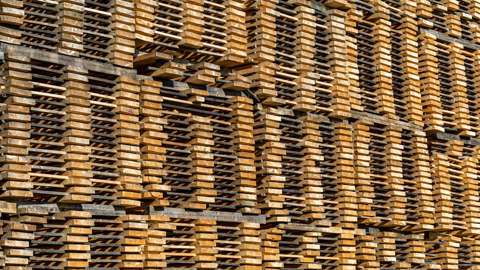
The EU’s new requirements for Digital Product Passports (DPPs) are opening the door to greater transparency throughout the value chain, from forest to industry. Soon, a simple QR code could reveal where the raw material originated and how the forest was managed.
From Fashion to Forestry
You have probably seen it in clothing stores—a QR code on a garment provides information about materials and environmental impact. Now it is the forest industry’s turn. In forestry, similar information on a finished product could be linked to the timber as soon as it leaves the harvesting site.
For the forestry sector, the threshold is paradoxically both low and high.
“Unlike some other industries, forestry already has access to most of the information required, but it is scattered across different systems. Much of the data is already recorded by planners, harvesters, forwarders, transport operators, and others. The main challenge is therefore not a lack of information, but rather how existing data can be structured, linked to individual products, and shared throughout the value chain,” says Mia Iwarsson Wide, program manager at Skogforsk (Forestry Researech Institute of Swden).
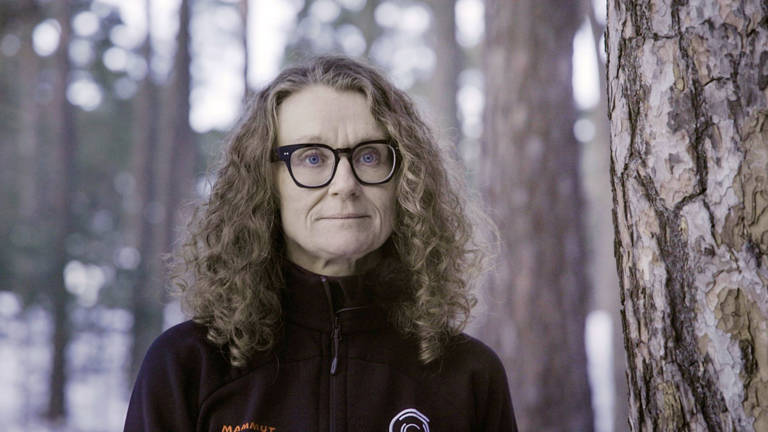 Maria Iwarsson Wide, Skogforsk.
A Dead End at the Mill Gate
In a pilot project involving Sveaskog, Älvsbyhus, and Skogforsk, researchers and industry partners were able to trace a log used in a specific wood product in a finished house all the way back to the harvesting site. In general, however, traceability still ends at the mill gate.
“When timber reaches the sawmill, it is sorted by quality and dimensions rather than by harvesting site. Today, it is nearly impossible to identify exactly where an individual board grew because raw material from different harvest operations is mixed together,” says Mia Iwarsson Wide.
The new EU regulations will not require traceability down to individual harvesting sites. The legislation refers instead to “appropriate geographies,” a concept that has been interpreted quite differently in countries such as Finland and Sweden. In Finland, reporting at the regional level is considered sufficient, while Sveaskog will be able to provide traceability to specific harvest operations. Achieving that, however, requires common standards.
“Internally, we have control of the data, but when it comes to sharing information with the rest of the industry, we hit a wall. We need common standards and terminology so that our systems can actually communicate with each other,” says Johan Flodström, IT Specialist at Sveaskog.
 Johan Flodström, Sveaskog.
For forestry contractors operating harvesters and forwarders, the digital product passport will not bring major changes. For forest companies, however, it will require significant adaptations of existing systems.
“As mentioned, it is currently difficult to identify exactly which harvesting site an individual board originates from because timber from different harvest operations is mixed at the sawmill,” says Mia Iwarsson Wide.
Homeowners Want to Know
It is not only Brussels that is driving this development. As part of the project, a survey was sent to 11,500 house owners to determine what information they actually care about.
“The results show that there is a genuine interest in learning more about their homes, both regarding origin and environmental performance,” says Jennifer Johansson, Marketing Manager at Älvsbyhus.
Mia Iwarsson Wide also believes that social aspects are becoming increasingly important.
“Future product passports will likely require transparency regarding everything from working conditions and accident statistics to engagement with local communities and the reindeer husbandry sector,” she says.
The Market Sets the Pace
Even if legislation takes time to implement, the market may move faster. Large European companies are increasingly unwilling to take risks within their supply chains.
“The digital product passport will be a way of demonstrating to consumers that sustainable products offer added value. We can actually verify how the forest has been managed throughout the entire value chain,” says Henrik Engman, Business Development Manager at Sveaskog.
 Henrik Engman, Sveaskog.
Traceability – Three Things to Keep in Mind
1. The systems do not communicate with each other.
Today’s systems were designed for internal control, not for sharing data externally. In addition, timber from different sources is mixed throughout the supply chain, making traceability a complex logistical challenge.
2. Transparency must be balanced against business risk.
Sharing a delivery ID is relatively simple, but maintaining the right balance between transparency and commercial sensitivity may prove challenging.
3. Real transparency matters.
If the product passport becomes merely a technical layer added on top of existing issues, it will lose its value. It must provide genuine insight into the issues that are actually being debated. And the market must like what it sees. Otherwise, buyers may increasingly turn to lower-cost, more energy-efficient raw materials from the Southern Hemisphere, where there may be fewer conflicts surrounding forestry operations.
Information That Can Be Displayed in a Digital Product Passport
1. Identity Information
Basic details about the company and the product.
2. Origin of the Raw Material
Where the tree came from and whether it is certified.
3. The Manufacturing Journey
How much energy was consumed during sawing, planing, and processing.
4. User Instructions
How to maintain, repair, and extend the life of the product.
5. Environmental Declaration
The product’s climate footprint and impact on biodiversity.
6. The Human Dimension
Information about working conditions and local social impacts.