
Praising Electric, Ditching Diesel – “It’s Time to Scale Up”
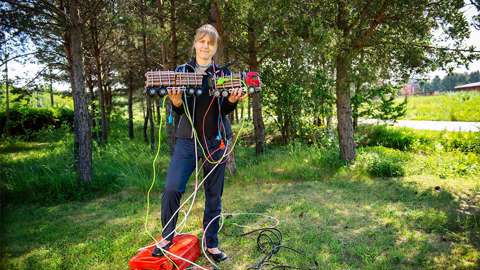
However, that is not the first thing project manager Anna Pernestål mentions when asked to share insights from the electrification project so far. Her immediate response is enthusiasm for the strong commitment shown by the participants. The project brings together 24 stakeholders from the transport and forestry sectors to develop electrified truck transportation.
“The commitment and drive are what I find most exciting. They have been absolutely crucial to the positive progress we’ve achieved. No one is giving up—we keep working together,” says Anna Pernestål.
Data is now being collected from the twelve electric vehicles currently in operation and analyzed. So far, the results have even exceeded expectations, according to Pernestål.
“Yes, the vehicles have performed better than we originally expected. The technology has even worked well during severe winter conditions in northern Sweden, which is impressive,” she says.
The electric trucks are therefore handling their tasks successfully, but significant challenges remain when it comes to charging.
“We need to achieve cost-effective charging, both in terms of time and money. Charging needs to become faster, and costs need to come down,” says Anna Pernestål, while emphasizing that costs involve more than just electricity prices.
“No, it’s also about investments in charging infrastructure, the power grid, and demand-based electricity tariffs.”
A Better Working Environment
The TREE project has also shown that electric propulsion improves the working environment for truck drivers. Many appreciate driving electric trucks and feel they are contributing to the green transition.
“Drivers feel they are becoming part of the solution rather than part of the problem,” says Anna Pernestål.
At the same time, economics remain a challenge for transport operators, since electric transport is still often more expensive than diesel-powered alternatives. However, TREE is also testing heavy electric transportation using a 94-tonne vehicle. Results indicate that, with today’s charging standards, the vehicle is just as transport-efficient as a conventional 74-tonne diesel-powered truck.
“With faster charging, the efficiency of the 94-tonne vehicle could increase by as much as 40 percent,” says Anna Pernestål.
Not every aspect of the project has developed exactly as planned from the outset. Some solutions have had to be revised, and some activities have been delayed. According to Pernestål, however, that is a natural part of innovation.
“If everything had turned out exactly as we envisioned from the beginning, we probably wouldn’t have needed an innovation project in the first place,” she says. Anna Pernestål, Skogforsk
Scaling Up Is the Next Step
TREE is now entering its next phase. The focus is shifting from demonstrating that the technology works to exploring how electrification can be scaled up. This includes charging infrastructure, business models, transport planning, and the regulatory frameworks needed to accelerate the transition.
According to the project’s overall objective, established when TREE launched in autumn 2023, half of all newly purchased trucks in the forestry sector should be electrified by 2030. Despite the ambitious target, Anna Pernestål says the industry’s response has been positive and curious rather than skeptical.
“Every time I present the project, I expect someone to say, ‘That will never work.’ But that hasn’t actually happened,” says Anna Pernestål.
The project has also gained recognition throughout the transport sector and attracted international interest. TREE will present four scientific papers at the World Conference on Transportation Research, one of the world’s leading transportation conferences. The event will take place in Toulouse, France, from 6–10 July this year.
“It’s quite remarkable that we’ve managed to achieve that from a single project,” says Anna Pernestål.